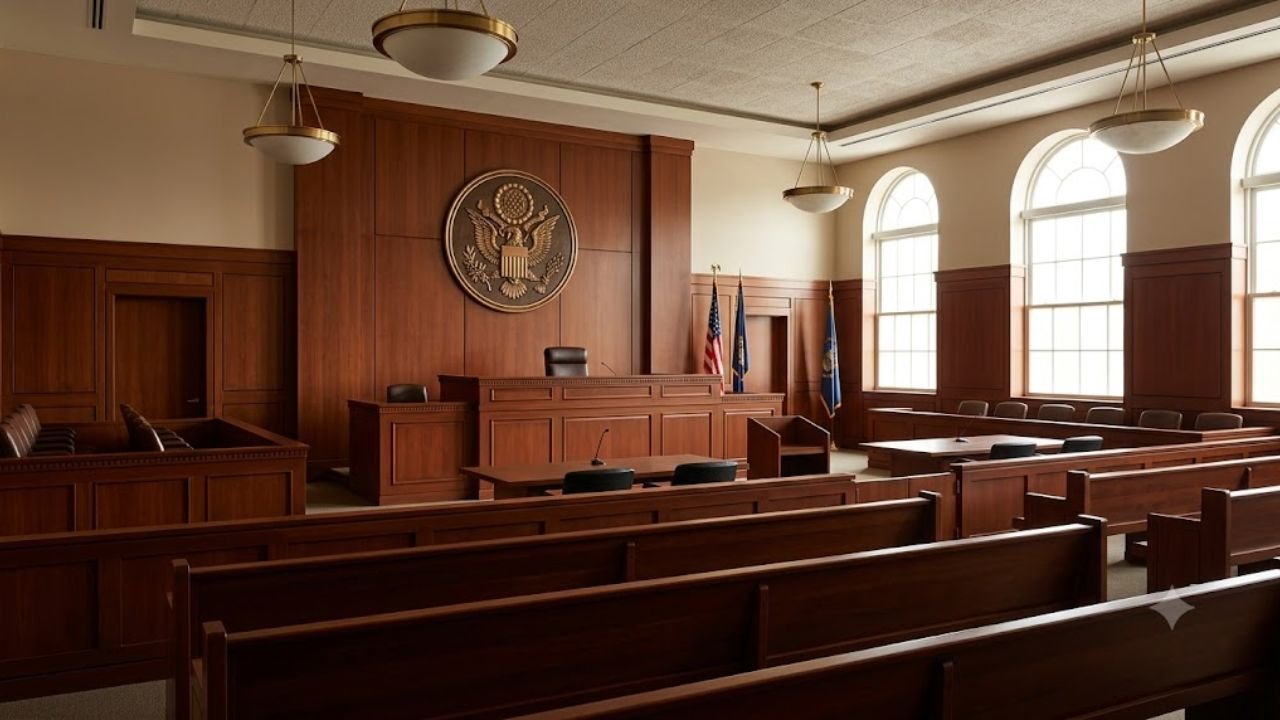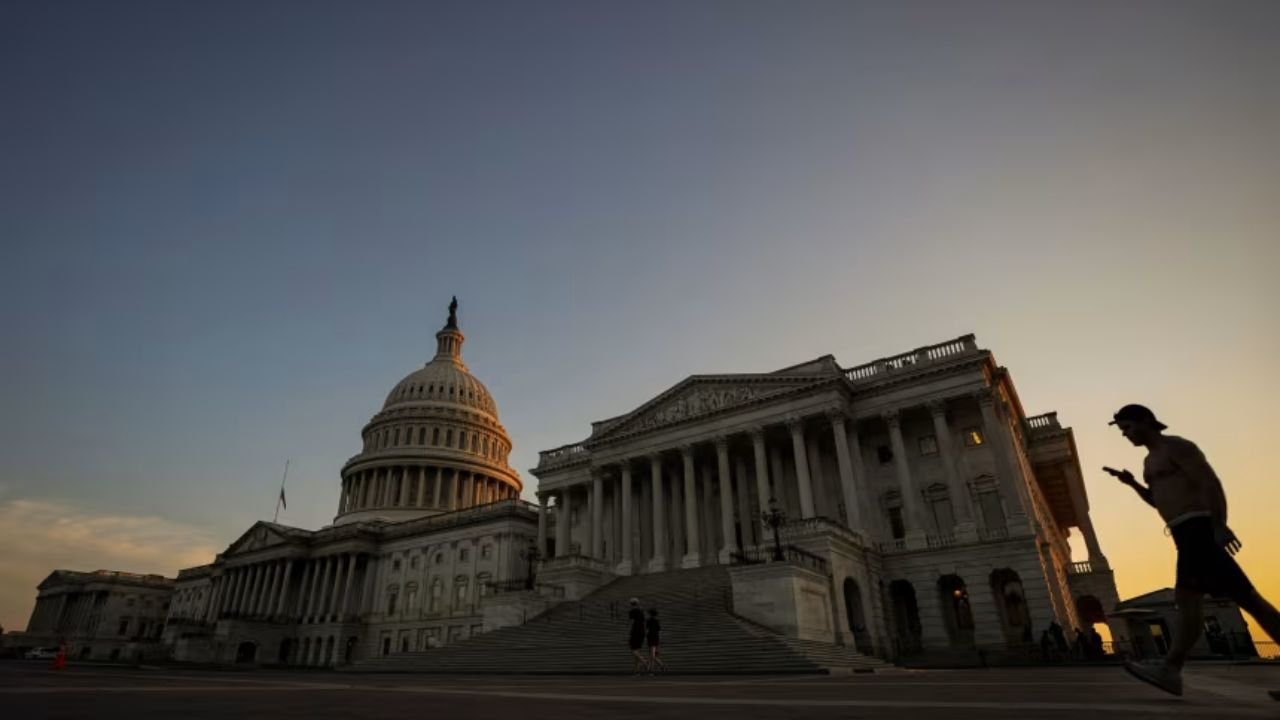
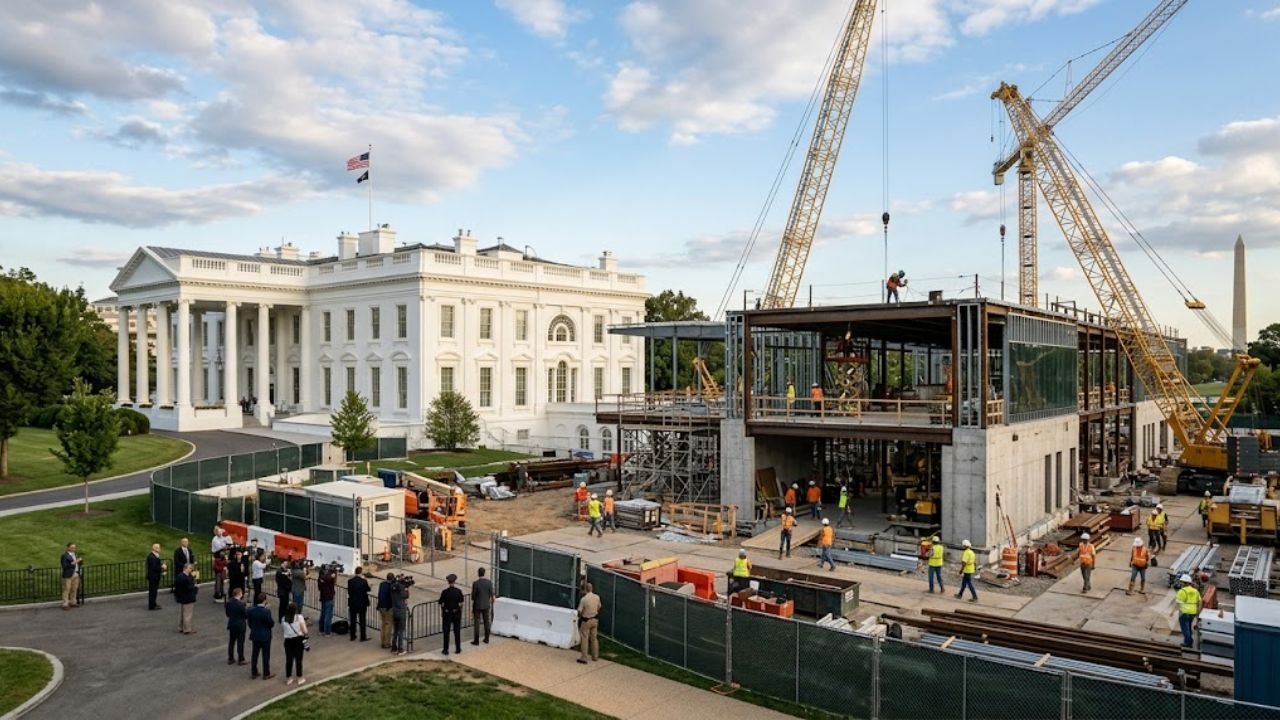
Supreme Court White House ballroom construction
The U.S. Supreme Court has temporarily cleared the way for construction of President Donald Trump’s proposed White House ballroom to continue, but the justices have not ruled that the project is lawful.
On Friday, Aug. 21, Chief Justice John Roberts issued an administrative stay, putting a lower-court order on hold while the Supreme Court considers the Trump administration’s request for further relief.
That distinction matters.
An administrative stay is essentially a temporary pause that preserves the status quo while a court decides what to do next. It is not a final ruling on the merits of the lawsuit.
Following this case closely, the most significant point is easy to miss: the Supreme Court has not yet answered the central question—does the president have legal authority to proceed with this major alteration to the White House without additional congressional authorization?
For now, construction continues.
What Did the Supreme Court Actually Do?
Chief Justice Roberts’ short order did not explain the justices’ reasoning or resolve the underlying legal dispute.
Instead, it temporarily prevented the lower-court injunction from taking effect while the Supreme Court considers the government’s emergency application.
In practical terms:
- Above-ground ballroom construction can continue for now.
- The lower court’s order stopping most above-ground work remains paused.
- The Supreme Court has not decided whether the ballroom itself is legally authorized.
- The National Trust for Historic Preservation’s lawsuit remains alive.
- The justices have not announced a final timetable for resolving the emergency request.
That means the Friday order is best understood as a procedural decision, not a victory on the underlying constitutional and statutory questions.
The Legal Fight Started in Federal District Court
The dispute began after the Trump administration moved forward with plans for a roughly 90,000-square-foot ballroom after demolishing the White House’s East Wing.
The National Trust for Historic Preservation challenged the project in federal court, arguing that the administration had moved ahead without the approvals and congressional authorization required by federal law.
U.S. District Judge Richard Leon eventually issued a preliminary injunction that would restrict most above-ground construction while the litigation proceeded. Underground work tied to security facilities was treated differently and was allowed to continue.
A preliminary injunction is a court order designed to prevent potential harm while a lawsuit is still being litigated. It does not necessarily represent the final judgment in the case.
That distinction is important here because the legal battle over the ballroom is far from finished.
Why the D.C. Circuit Ruling Matters
The Trump administration appealed Leon’s ruling to the U.S. Court of Appeals for the District of Columbia Circuit.
On Aug. 7, a divided three-judge panel upheld the lower court’s injunction, while giving the administration time to seek emergency relief from the Supreme Court.
The appellate court’s reasoning went to the heart of the dispute.
Judges Patricia Millett and Bradley Garcia wrote that Congress has constitutional authority over federal property and that the administration had not identified sufficient authorization allowing the executive branch to undertake such a major alteration of the White House.
The appellate court did not necessarily say that a ballroom can never be built.
Its position was narrower: the executive branch could not proceed during the litigation without securing the congressional authority the court believed federal law requires.
That is a very different question from whether the ballroom is a good idea as a matter of policy.
The Trump Administration’s Argument
The Justice Department has taken a fundamentally different position.
Solicitor General D. John Sauer argued before the Supreme Court that stopping the project would interfere with an integrated security and military complex and could create national-security problems. The administration has described the project as important to protecting the president and senior government officials.
The government also argues that the president and executive branch already possess statutory authority to make alterations and improvements to the White House and that other federal laws provide authority for construction on federal property.
There is another major argument: standing.
Standing is the legal requirement that a person or organization challenging government action demonstrate a sufficient connection to the alleged injury.
The administration argues that the National Trust does not have the necessary legal standing to bring the lawsuit.
If the Supreme Court agrees, the case could potentially be resolved without the justices reaching every question about presidential authority.
The National Trust’s Response
The National Trust has taken the opposite view.
Its lawyers argue that the administration cannot accelerate construction and then tell the courts that stopping the project is impractical because the building is already too far along.
In its Supreme Court filing, the Trust accused the administration of trying to “outrun judicial review” by moving construction forward at extraordinary speed.
The Trust’s legal theory is straightforward: if Congress has not authorized the project, the executive branch cannot create a fait accompli by building first and litigating later.
That argument creates a difficult problem for the courts.
If construction becomes substantially complete before the Supreme Court reaches the merits, a later ruling requiring changes or demolition could be far more disruptive than an order issued before construction began.
Why Construction Speed Has Become a Legal Issue
One of the most unusual aspects of this litigation is the speed of construction.
The administration told the Supreme Court that the project was already about 65% complete and that hundreds of workers were operating on an aggressive schedule.
The government has used that progress to argue that stopping construction would cause serious disruption and potentially create consequences that cannot easily be reversed.
The National Trust sees the same fact differently.
Its argument is that rapid construction should not give the government a legal advantage if the underlying project was unauthorized.
That creates a classic judicial dilemma: Should the court preserve an existing project while the legal questions are being decided, or stop construction before the disputed action becomes effectively irreversible?
White House Ballroom Case: Where Things Stand
| Issue | Current Status |
|---|---|
| Ballroom size | About 90,000 square feet |
| Estimated project cost | About $400 million, according to government filings and reporting |
| East Wing | Demolished as part of the project |
| Above-ground construction | Allowed to continue for now |
| Underground security work | Previously allowed to continue |
| District court | Issued injunction restricting above-ground work |
| D.C. Circuit | Upheld the injunction |
| Supreme Court | Temporarily stayed the injunction |
| Final Supreme Court ruling | Still pending |
| Main legal questions | Presidential authority, congressional authorization, standing and judicial relief |
The case is therefore not over.
What Is an Administrative Stay?
This is one of the most important pieces of legal terminology in the story.
An administrative stay does not normally mean that the court has decided which side is legally correct.
Instead, it gives the court time to consider an emergency request while preventing the challenged order from immediately changing the situation on the ground.
Think of it as pressing pause—not declaring a winner.
That is why headlines saying the Supreme Court “approved” or “ruled in favor of” the ballroom can be misleading.
The more accurate description is that the Supreme Court has temporarily allowed construction to proceed while it considers the administration’s request.
The Bigger Constitutional Question
The ballroom dispute reaches beyond architecture.
At its core is a separation-of-powers question:
How much authority does a president have to make major physical changes to a federally controlled historic property without Congress?
The Constitution gives Congress significant authority over federal property. The National Trust argues that the White House cannot be substantially redesigned simply because the executive branch believes the project is desirable or necessary.
The administration counters that existing statutes already give the president and executive agencies sufficient authority.
That clash puts presidential power and congressional control of federal property directly against each other.
What This Means for Americans
For most Americans, the immediate effect is limited. This is not a case that changes someone’s individual legal rights or creates a new nationwide rule overnight.
But the eventual ruling could have broader consequences for presidential authority over federal property.
The case may also affect how courts treat challenges brought by preservation groups and other organizations claiming injury from changes to historically significant government property.
There is also a practical lesson here.
When a court dispute involves construction, timing can become legally significant. Once a building is substantially completed, undoing the government’s action can become considerably harder than stopping the project at the beginning.
What Happens Next?
The immediate question is whether the Supreme Court will leave the administrative stay in place, modify it, dissolve it, or take further action on the government’s emergency application.
The justices could also eventually confront the underlying legal questions, including whether the National Trust has standing and whether Congress authorized the project.
As of the latest order, there is no final Supreme Court ruling declaring the ballroom lawful or unlawful.
Final Takeaway
The Supreme Court’s latest action gives the Trump administration something it urgently wanted: time and continued construction.
But it does not settle the central legal dispute.
The lower courts have raised serious questions about whether the executive branch can undertake such a major transformation of the White House without congressional authorization. The administration argues that existing federal authority and national-security concerns justify the project.
The Supreme Court now has to decide whether the lower-court injunction should remain paused—and potentially, whether the broader legal theory behind the ballroom project can survive judicial review.
For now, the cranes keep moving.
The courtroom fight is not finished.
FAQs
1. Did the Supreme Court approve Trump’s White House ballroom?
No. The Supreme Court temporarily allowed construction to continue by issuing an administrative stay. That order does not decide whether the project is ultimately legal.
2. What is an administrative stay?
An administrative stay temporarily puts a lower-court order on hold while a higher court considers what action to take. It is generally procedural rather than a final ruling on the underlying case.
3. Why is Congress involved in the dispute?
The National Trust argues that Congress has authority over federal property and that the executive branch lacks sufficient authorization to demolish part of the White House and construct the new ballroom. The administration disputes that interpretation.
4. Can construction still be stopped later?
Yes. The Supreme Court’s temporary order does not guarantee that the project will ultimately survive the lawsuit. Depending on later court rulings, additional restrictions or other remedies could still be considered.
Legal Disclaimer: This article is for informational and educational purposes only and does not constitute formal legal advice. Court proceedings can change quickly, and readers should consult a qualified attorney for advice about a specific legal matter.
Legal Disclaimer: This article is for informational and educational purposes only and does not constitute formal legal advice. Court proceedings can change quickly, and readers should consult a qualified attorney for advice about a specific legal matter.Continue using AI Cursor?Keep it onTurn Off