Save America Act
President Donald Trump is intensifying his push for Congress to pass the Save America Act, a sweeping election and policy bill he claims will secure election integrity ahead of upcoming midterm elections.
During a recent prime-time address focusing on U.S. election infrastructure, Trump urged citizens to pressure their senators and representatives to pass the legislation immediately. “Congress must pass the Save America Act,” Trump stated. “The only reason you wouldn’t do it is you want to cheat.”
While high-profile Republicans like Senator Mike Lee (R-Utah) have demanded the Senate focus on nothing else until the bill passes, leadership faces a stark reality. Senate Majority Leader John Thune (R-South Dakota) and several other key Republicans have acknowledged that the bill currently lacks the necessary support to clear the Senate.
Here is a comprehensive breakdown of what the Save America Act contains, where the public stands on its provisions, and why it remains stalled on Capitol Hill.
What is the Save America Act?
Originally passed by the House of Representatives, the Save America Act focuses heavily on voter registration and identification laws. However, executive priorities over the past few months have dramatically widened the scope of the bill.
Key Voting Provisions
-
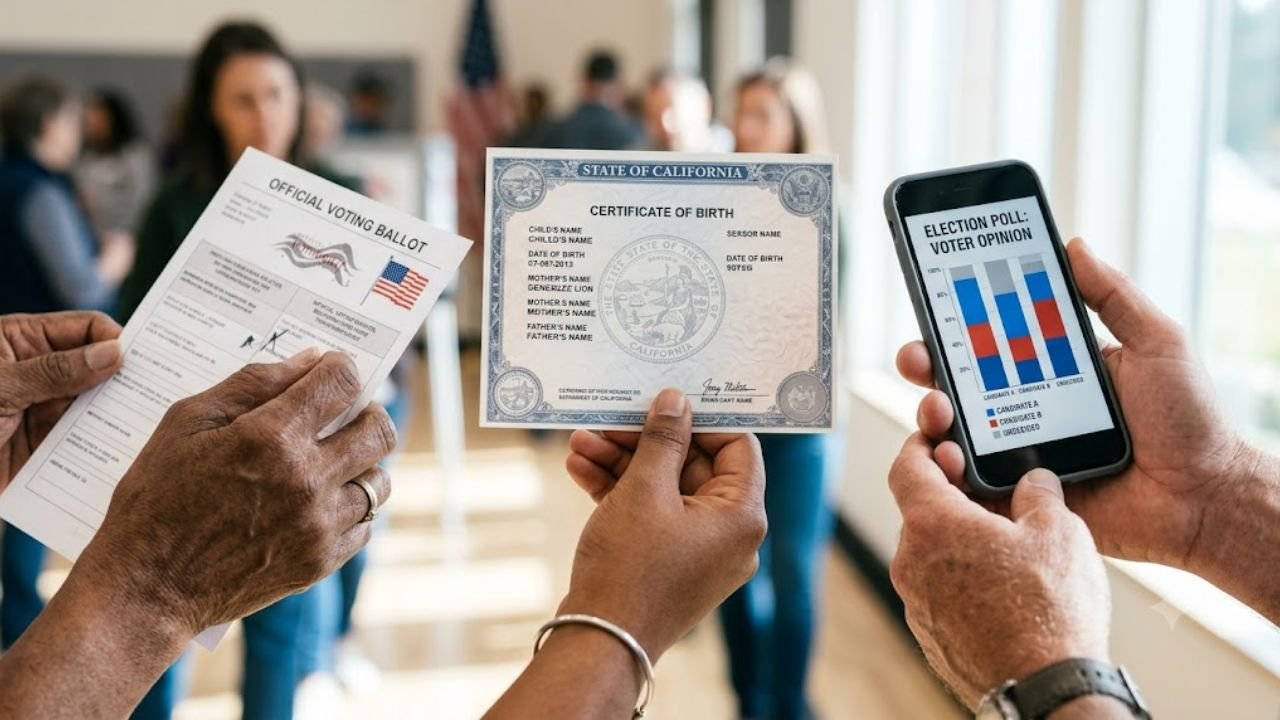
Proof of Citizenship: The bill mandates that Americans provide definitive proof of U.S. citizenship (such as a birth certificate or passport) when registering to vote.
-
Photo Identification: Voters would be required to show a valid photo ID at the polls.
-
Data Sharing: States would be required to share their voter registration rolls with the Department of Homeland Security (DHS) to verify eligibility.
Expanded Policy Proposals
Trump has advocated for adding broader conservative policy provisions to the legislation, including:
-
A near-total ban on mail-in voting.
-
Restricting transgender women and girls from competing in female sports categories.
-
Banning gender-affirming healthcare and specific medical treatments for minors.
Opponents of the bill, led by Senate Minority Leader Chuck Schumer (D-New York), have strongly criticized the legislation, labeling it “Jim Crow 2.0” and arguing that the strict requirements would disproportionately restrict access for eligible American voters.
Public Opinion: Is the Save America Act Popular?
Data shows that public support for the bill is highly divided, with specific provisions enjoying broad popularity while others face significant resistance.
| Provision | Public Support Rate | Source |
| Voter Photo ID Requirements | 83% Support | Pew Research Center |
| Proof of Citizenship at Registration | 61% Support | Washington Post-ABC News-Ipsos |
| Restricting Youth Transgender Healthcare | 71% Support | New York Times-Ipsos |
| Banning Mail-In Voting Options | 42% Support (58% Opposed) | Pew Research Center |
While voter ID laws and specific social policies align with majority public opinion, the proposal to eliminate no-excuse mail-in voting remains deeply unpopular with a majority of Americans.
Why the Bill is Stalled in the U.S. Senate
Despite a 53-47 Republican majority in the Senate, the Save America Act faces insurmountable procedural hurdles.
The 60-Vote Filibuster
To bypass a guaranteed Democratic filibuster, Republicans need 60 votes to advance the bill to a final vote. Because Senate Republicans do not have the numbers—or the internal desire—to abolish the legislative filibuster, the bill cannot pass on a purely partisan basis.
Internal Republican Division
The bill lacks unanimous support within the Republican party itself. Several moderate and institutionalist GOP senators have resisted the push:
-
Senator Lisa Murkowski (R-Alaska) voted against bringing the bill to the floor for debate.
-
Sens. Mitch McConnell (R-Kentucky), Susan Collins (Maine), and Thom Tillis (North Carolina) joined Murkowski in voting down an amendment to attach the bill to separate must-pass legislation.
Can the Save America Act Still Pass?
House Speaker Mike Johnson (R-Louisiana) and House leadership are attempting to utilize budget reconciliation—a procedural tool that allows certain budget-related bills to pass with a simple majority—by attaching elements of the Save America Act to Pentagon and agricultural funding.
However, strict Senate reconciliation rules will likely disqualify most of the non-budgetary voting and social policy changes. Instead, Republicans may have to pivot to offering federal grants to states that voluntarily implement these strict voting rules.
Furthermore, lawmakers face severe logistical constraints. Senator Tillis warned that even if the bill miraculously passed, states would not have enough time to implement the sweeping changes before the upcoming elections. Doing so, he warned, could undermine public trust in the final results.
Conclusion: The Path Forward for Election Legislation
The Save America Act highlights the deep ideological divide in Washington over election administration and cultural policy. While individual elements of the bill—like voter ID requirements—command broad bipartisan support among the American public, the comprehensive package faces a mathematical dead-end in the Senate. As the midterms approach, the debate will likely shift from federal mandates to state-level legislative battles over how Americans cast their ballots.